logo
Dan McCreary & Associates
About Services Vision and Values Process Training References Case Studies Articles Presentations Partners Contact Us
Fun Stuff
Dev Books Graphs Blogs and Wikis Photography

NIEM/GJXDM Training

Course Description: NIEM (National Information Exchange Model) and GJXDM (Global Justice XML Data Model) is are XML metadata registry created by the US Department of Justice for the exchange of data between Criminal Justice agencies across the US.  These systems are complex yet powerful system.  GJXDM includes almost 2,700 data elements and comes with some of the most advanced sub-schema generation tools available for creating semantically precise exchange documents.  This class covers an background, of GJXDM, description of the structure of the GJXDM, as well as hands-on experience using the GJXDM subschema generation tools.

Target Audience: This class is appropriate for data architects, project managers, business analysts,  and software developers exchanging criminal justice documents.  This base section of this class uses visual representations of XML Schema provided by tools such as Altova's XML Spy.  This allows people without knowledge of XML Schema file structure to understand the structure of GJXDM.  Advanced labs will require a background of reading and modifying XML Schemas.

Prerequisites: Knowledge of how to use a Microsoft Windows computer including mouse and keyboard skills are essential for the successful completion of the labs.  Knowledge of computer systems operation, databases and data structures and data types is also helpful.  If the class participants have a background in XML (see XML course above) this class proceed through the introductory material much faster. Knowledge of XML Schema is required for many of the optional advanced labs.

Sample Course Content

  1. Background of the GJXDM
  2. Scope of GJXDM
  3. Business benefits of using GJXDM
  4. GJXDM and other standards (NIEM, ISO/IEC 11179, ebXML)
  5. GJXDM terminology: Document schemas, constraint schemas, namespaces
  6. Browsing the GJXDM
  7. High-level overview of GJXDM structures: (A-D-O-P)
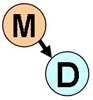
  8. Moment-Interval Modeling: Sub-classing Activity
  9. Document: the resource container
  10. Identifying and Modeling Organizations: The Organization Concept
  11. Person: Describing people
  12. Shared Components: Contacts and Address
  13. Capturing GIS Data: Location, Longitude and Latitude
  14. Codes and enumerations
  15. What if you can't find it in GJXDM? Creating Extensions
  16. Importing your own data elements and your private namespaces
  17. Data element name conventions
  18. Representation Terms
  19. Creating precise definitions
  20. Creating exchange documents
  21. Publishing your GJXDM extensions
  22. Subschema generation
  23. Wantlists
  24. Adding GJXDM Constraints

Optional Additional Topics

  1. Justice Information Exchange Model (JIEM)
  2. XML Schemas
  3. Modeling relationships
  4. Graph theory and RDF
  5. Using the GJXDM spreadsheets
  6. Writing transforms of the GJXDM XML Schema
  7. Converting GJXDM to OWL format
  8. Building and publishing an exchange document
  9. Incident
  10. Case
  11. Integrating GJXDM exchange documents into WSDL and web services
  12. XML Schema
  13. XML imports (Requires knowledge of XML Schema)
  14. XML Schema Type Libraries (Requires knowledge of XML Schema)
  15. XML Schema Exchange Documents (Requires knowledge of XML Schema)
  16. Document metadata

Labs

  1. Finding data elements in GJXDM
  2. Using the GTRI XML subschema generator
  3. Designing and exchange documents
  4. Structure of the GJXDM Schema
  5. Understanding XML Schema Types
  6. Extending the GJXDM
  7. Advanced Visualization Lab: Transforming GJXDM Schemas

Advanced Labs (Requires knowledge of XML Schema)

  1. Structure of the GJXDM Schema
  2. XML Schema Import lab
  3. Understand XML Schema Types
  4. Importing data elements from multiple namespaces
  5. Adding custom XML Schema Types
  6. Advanced Visualization Lab: Transforming GJXDM Schemas

Length: 2-3 days depending on audience background and options.

Cost: A two-day class is $5,995 including presentation handouts for 10 students.  Add $95 for each additional student above 10.  Customization work is performed at $150.00/hr. This price does not include lodging, transportation or classroom setup time.

Classroom setup: This learning rate of class participants can be enhanced if the classroom is equipped with computers that have XML software installed. We strongly encourage the use of Altova's XMLSpy Pro. Please contact us for detailed specifications.


©2002-2009 Dan McCreary & Associates, All Rights Reserved.